

This course provides learners with the core knowledge and practical skills required to begin a career in aviation engineering. This entry-level qualification introduces students to fundamental aeronautical engineering principles, workshop practices, safety procedures, aircraft components, and industry standards. Graduates are well-prepared to move into an aeronautical engineering apprenticeship and continue their pathway toward becoming qualified aircraft maintenance engineers.
If you're considering a career in the aviation industry as an aeronautical engineer, this is course viewed by industry as essential.
Contact us.avif)
.avif)
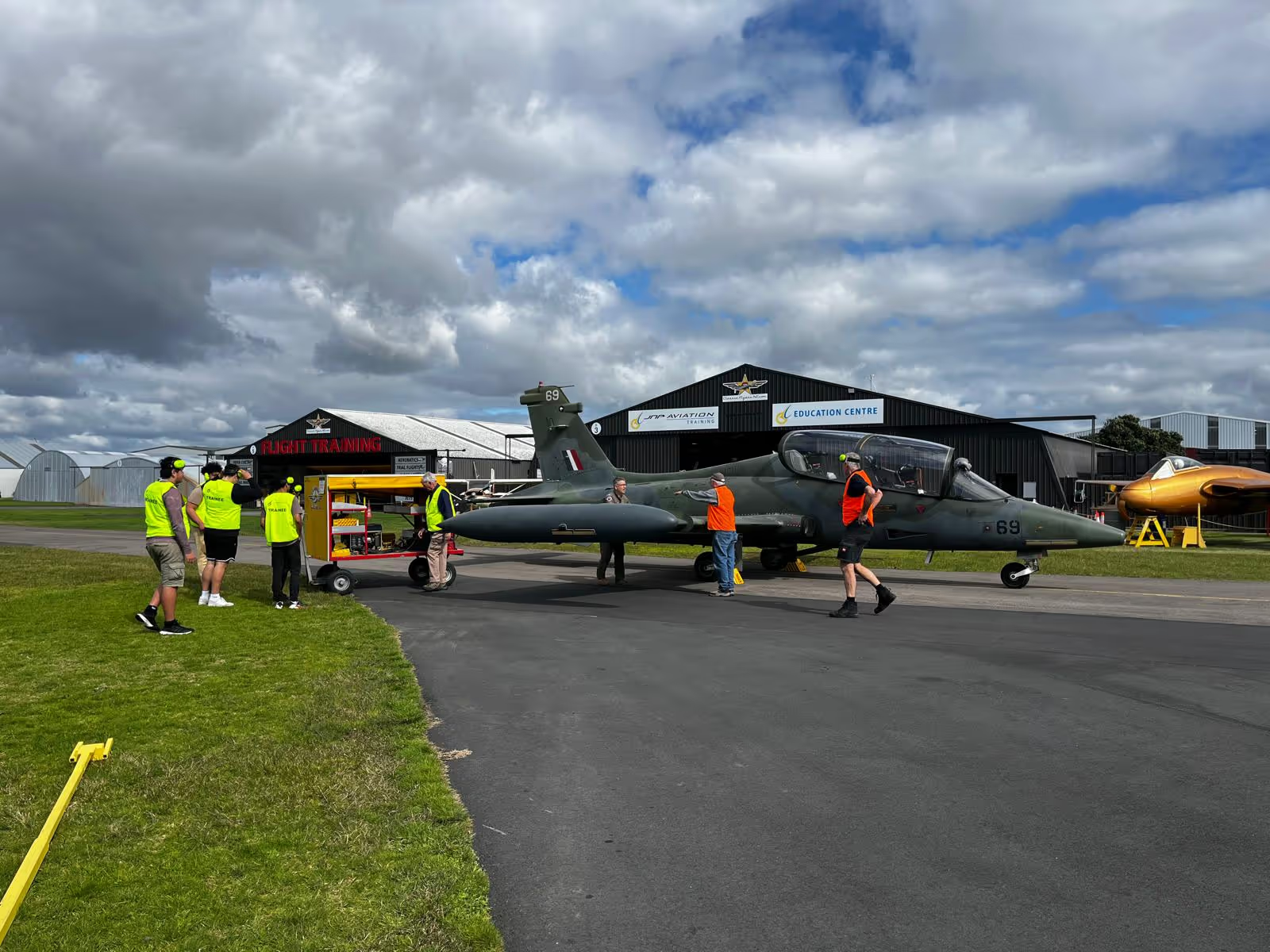
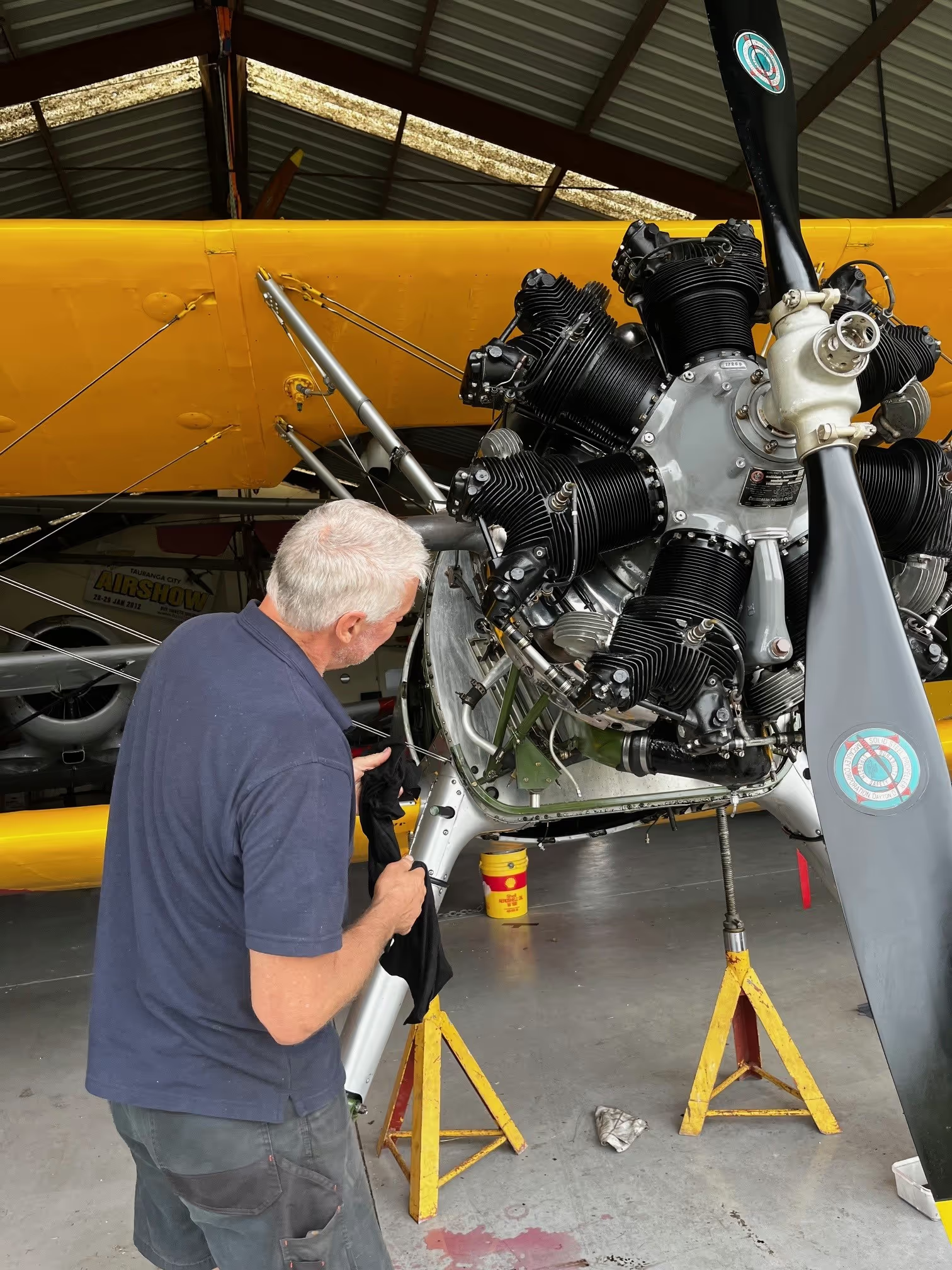
You’ll learn how to confidently use real aviation maintenance documentation and apply it to practical, real-world engineering tasks. You’ll gain hands-on experience operating aeronautical engineering tools and equipment to industry standards, while developing strong safety habits and an understanding of the regulations that guide modern aviation workplaces.
You’ll explore human factors in engineering—learning how effective teamwork, communication, and situational awareness support safe and efficient aircraft maintenance. The programme also builds your understanding of aircraft construction, systems, maintenance, repair, and overhaul processes, giving you the foundational knowledge needed for more complex engineering work. By the end of the course, you’ll be well prepared for an aeronautical engineering apprenticeship and ready to take the next step into a rewarding aviation career.
New Zealand Citizen or Resident: 17+years
It is recommended that applicants have successfully completed NCEA [Level 2 or 3] in maths, physics, and english, along with a technology subject. A determination is made on a case by case basis for applicants who do not meet these criteria and JNPAT may provide a placement test. The testing will include assessments on Literacy & Numeracy, Maths & Physics (NCEA level 2 based) and English Comprehension.
A school leaver that has completed the Introduction to Aeronautical Engineering (micro-credential) level 3 will gain entry, however they will be required to take part in Course One to revise Health and Safety in the Workshop.
All applicants will be asked to complete an interview - either online or in person.
Covered shoes and long hair must be tied back.
Appropriate PPE will be provided.
This level 3 pre-employment certificate is viewed by industry as being essential for preparing new apprentices for roles within aviation engineering workshops. While not guaranteed, we support students to find suitable apprenticeships to continue their career pathway.
Students can also choose to progress to further study - New Zealand Certificate in Aeronautical Engineering (Applied Skills) level 4. This is currently offered by Te Pukēnga (Nelson & Wellington) and Air NZ Academy of Learning in Auckland.
This Certificate consists of 130 credits and cover the following main topics in aeronautical engineering.
- Select and use appropriate aircraft maintenance documentation to complete maintenance tasks.
- Select and use aeronautical engineering tools and equipment in line with current aeronautical engineering practices.
- Apply safe work practices in an aeronautical engineering environment.
- Apply knowledge of human behaviour and performance to ensure effective engineering and team dynamics.
- Maintain, repair and overhaul aircraft by integrating the fundamental principles of aircraft construction and maintenance, including the application of aeronautical publications and aircraft maintenance documentation.
- Apply the fundamental knowledge and principles of aircraft construction and maintenance, and aircraft systems and system maintenance to carry out aircraft and system maintenance.
Simply fill out an enquiry form and we will get back to you shortly.

By taking this course this could get you on the path some of these careers within the aviation industry.

Aerospace engineers focus on designing, developing, testing, and producing aircraft, spacecraft, and related systems and equipment.


A LAME is the person officially licensed by a national aviation authority (like NZCAA) to certify that an aircraft is safe and fit to fly after maintenance has been performed.
Hear first-hand from students who've taken the courses and created a career in the aviation industry.