
Supporting youth to take their first steps into a rewarding, high-demand industry.

Supporting youth to take their first steps into a rewarding, high-demand industry.
New Zealand’s aviation sector offers a wide range of diverse and exciting career opportunities with strong demand for skilled pilots, engineers, ground operations specialists and technicians.

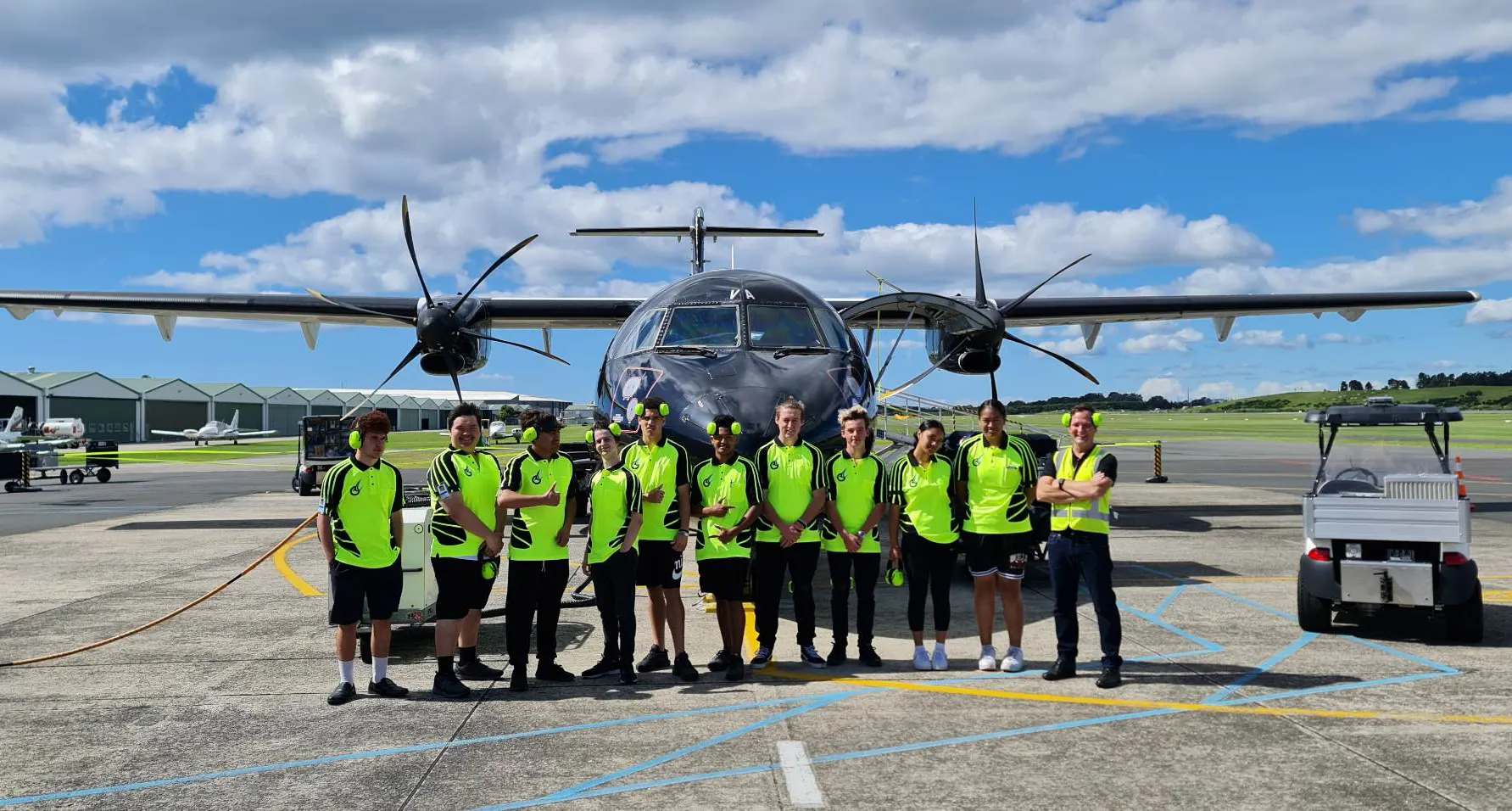
Our vocational courses are a great way for your young adult to "learn by doing" and provide them with a real-world experience to help guide their career decisions - all while building foundational knowledge, gaining NCEA unit standards and credits, as well as vital workplace skills.
Students attend our micro-credential and entry-level courses while still in school giving them a hands-on introduction to three key areas of the aviation industry - ground operations, flight and aeronautical engineering.
We aim to provide an authentic experience—one that helps young people build confidence, make informed choices, and take their first steps into a thriving industry when they leave school.

School leavers can choose to take their next step into a career in aviation engineering by going on to complete our Certificate in Aeronautical Engineering (Level 3, 130 credits, fulltime for one year, four days/week).
Some of our ground handling micro-credential graduates also move into entry level positions in various roles at airports around New Zealand via our connection with JNP Aviation Ltd - who provide ground services to many airports.

Our courses are designed collaboratively by industry and education experts to ensure learners acquire the most relevant and industry-aligned foundational skills.

Your student's school usually funds courses for secondary school students via their government funding streams such as Gateway. We are also happy to work together with the student, their whanau and school for the best possible outcome for your rangatahi - so please don't hesitate to reach out.
If you have any questions, you are welcome to contact us

"We are very happy with the experience our son, Dylan (year 11), had this year on your ramp operations course and aviation engineering course... they have helped Dylan to move towards training and employment in a very strong position... these practical courses are especially helpful for students like Dylan who thrive in a more real-world setting... Rather than spinning wheels in a secondary classroom setting, Dylan was able to follow his genuine interests and enter into training that suits him.
Te Kura, JNP Aviation Training, and the support provided by Classic Flyers CEO Andrew Gormlie (who also supports Dylan as a mentor and as an instructor with JNPAT) knit together a very special and valuable intersection of capabilities that can and will have an impact on many students like Dylan..."
Words from Andre
Proud Dad - whose son graduated from our "Take Off - Introduction to Ground Handling micro-credential (Level 3, 20 credits) and Introduction to Aeronautical Engineering micro-credential (Level 3, 22 credits) in 2025.
Dylan's next steps
He has applied for a one-year course in welding and fabrication at Toi Ohomai for 2026, and will then go on to apply for an aviation engineering program when he turns 17 and is eligible to do so.
.webp)

Ask your student to email us at info@jnpat.ac.nz with their name, DOB and the course they are interested it. We can then follow up with next steps and further information. Please note that to attend our courses, your child's Career Advisor or Gateway Coordinator will have to approve their attendance and they may have prerequisites to be met.
Our Introduction to Engineering course is only offered in Tauranga, but our Take Off (ground handling) and Take Flight courses are offered at more and more airports around New Zealand - please check out our current locations here.
Our introductory Gateway courses undertaken while still enrolled in Secondary School do not have any apart from needing to be enrolled in Year 11-13 at both the start and end dates of the course. Keep in mind, some schools may have conditions that your child must meet to attend off-site courses.
Our Certificate in Aeronautical Engineering offered at our main education hub in Tauranga has a placement test that may need to be completed. This includes assessments on Literacy & Numeracy, Maths and Physics - or if your student has completed these and gained their Level 2 NCEA across these subjects they may not need to complete the test.
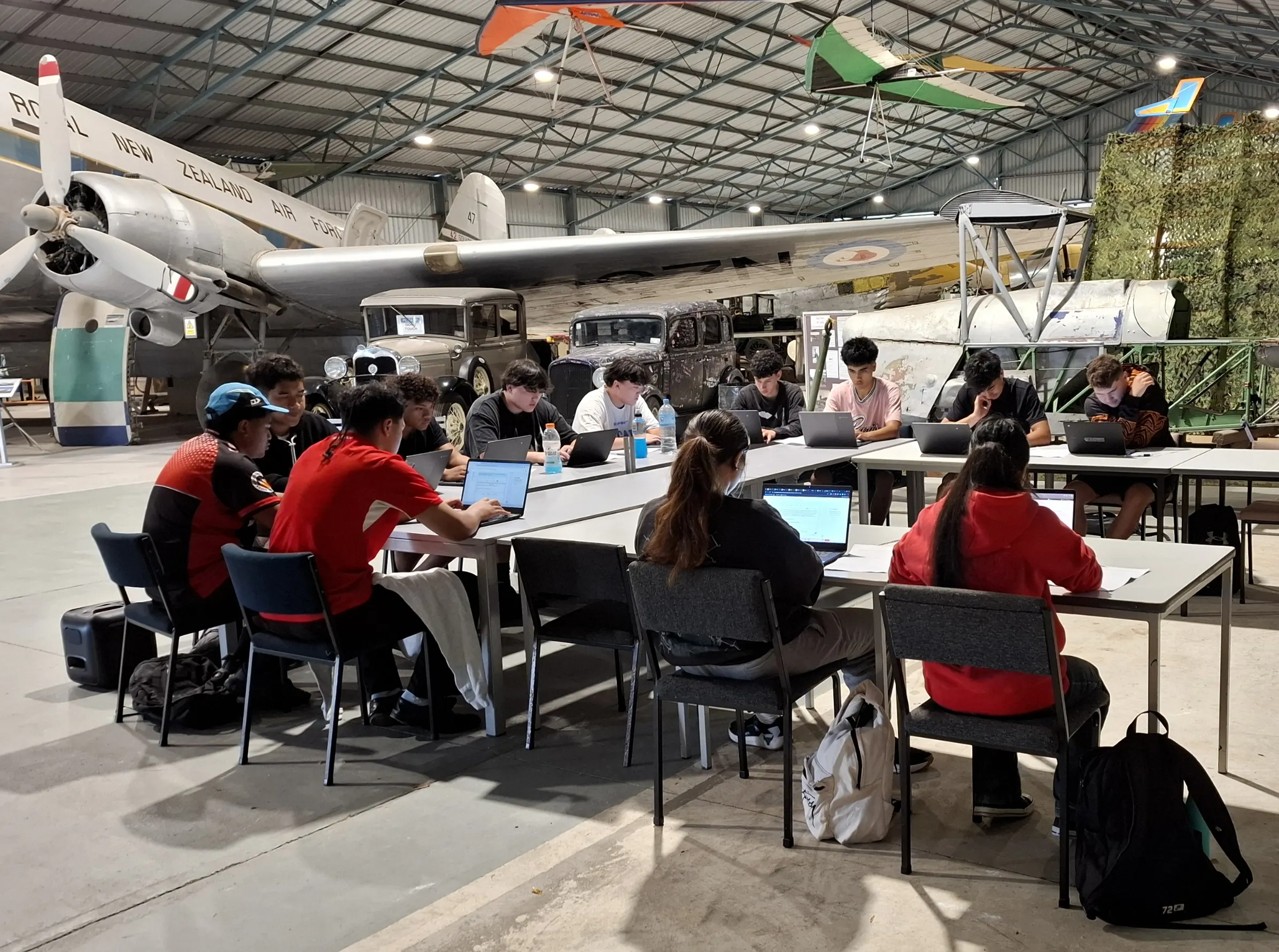
A chromebook or laptop is required to complete the online learning and assessment components (a phone isn't suitable) for Take Off and Take Flight. IF this is a concern, please let us know. Our Introduction to Aeronautical Engineering is an exception, no BYOD required, a workbook is supplied instead.
Here is a quick checklist: